
Few things make a home look neglected faster than peeling paint. Whether it’s bubbling walls, flaking ceilings, or cracking trim, peeling paint is more than just a cosmetic issue—it’s a sign that something underneath isn’t right.
At Aura Painting & Co, we often see homeowners repaint over peeling areas, only to have the problem return within months. The truth is, peeling paint won’t go away unless you fix the root cause.
Let’s break down why paint peels—and how to fix it the right way.
What Causes Paint to Peel?
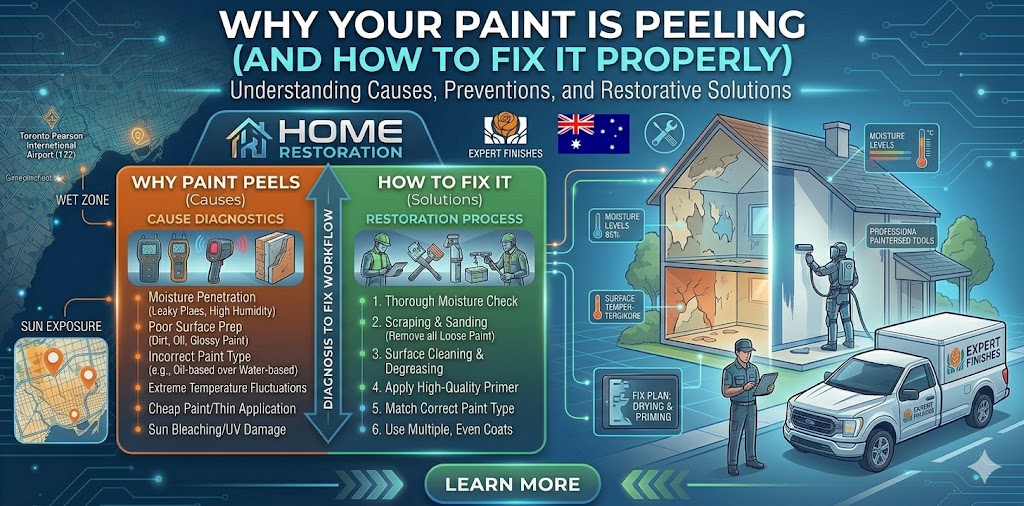
Peeling paint happens when the bond between the paint and the surface weakens. Several factors can cause this:
- Moisture Damage
Moisture is the #1 cause of peeling paint. Water can seep in from:
- Leaky roofs
- Plumbing issues
- High humidity (especially in bathrooms and kitchens)
When moisture gets trapped beneath the paint, it pushes the paint layer away from the surface, causing bubbles and peeling.
- Poor Surface Preparation
Painting over dirty, dusty, or glossy surfaces prevents proper adhesion.
Common prep mistakes include:
- Skipping sanding
- Not cleaning the surface
- Painting over old, loose paint
Without proper prep, even high-quality paint won’t stick.
- Low-Quality or Incorrect Paint
Using cheap or unsuitable paint can lead to early failure.
Examples:
- Interior paint used outdoors
- Low-grade paint with weak binders
- Incorrect finish for the surface
Quality matters more than most homeowners realize.
- Painting in the Wrong Conditions
Temperature and humidity affect how paint dries.
Painting in:
- Extreme heat
- Cold temperatures
- High humidity
…can prevent proper curing, leading to peeling later on.
- Skipping Primer
Primer creates a strong base for paint to adhere to. Without it, paint may not bond well—especially on porous or repaired surfaces.
Signs Your Paint Problem Is Serious
Not all peeling is equal. Here’s when you should take it seriously:
- Paint is bubbling or blistering
- Large sections are flaking off
- Peeling keeps coming back after repainting
- There’s visible mold or dampness
These signs usually indicate deeper issues like moisture or structural problems.
How to Fix Peeling Paint Properly
Fixing peeling paint isn’t just about repainting—it requires a step-by-step approach.
Step 1: Identify and Fix the Root Cause
Before touching the paint, address the underlying issue:
- Repair leaks
- Improve ventilation
- Control humidity
If you skip this step, the problem will return.
Step 2: Remove All Loose Paint
Use tools like:
- Scrapers
- Sandpaper
- Wire brushes
Remove every bit of peeling or flaking paint. Painting over damaged areas will only lead to failure.
Step 3: Clean and Prepare the Surface
Thoroughly clean the area to remove:
- Dust
- Grease
- Mold or mildew
A clean surface ensures proper adhesion.
Step 4: Sand for Smoothness
Sanding evens out rough edges and helps new paint bond better.
For best results:
- Feather the edges of old paint
- Create a smooth transition between layers
Step 5: Apply High-Quality Primer
Primer is essential, especially on:
- Bare wood
- Drywall repairs
- Previously damaged areas
It seals the surface and creates a strong foundation.
Step 6: Repaint with the Right Paint
Choose high-quality paint suited for the environment:
- Moisture-resistant paint for bathrooms
- Exterior-grade paint for outdoor surfaces
- Durable finishes for high-traffic areas
Apply at least two coats for long-lasting results.
Preventing Paint Peeling in the Future
Once your paint is fixed, proper maintenance can prevent future issues:
- Keep humidity levels under control
- Use exhaust fans in kitchens and bathrooms
- Inspect for leaks regularly
- Clean surfaces before repainting
- Always use primer when needed
Prevention is far easier—and cheaper—than repeated repairs.
DIY vs Professional Painting
While small peeling areas can be handled yourself, larger or recurring problems often require professional help.
A professional painter can:
- Identify hidden issues
- Use proper tools and materials
- Ensure long-lasting results
Improper fixes may look good temporarily but fail quickly.
Why Choose Aura Painting & Co?
At Aura Painting & Co, we don’t just repaint—we solve the underlying issues that cause paint to fail. Our team ensures proper surface preparation, premium materials, and flawless finishes that last.
Final Thoughts
Peeling paint isn’t just a surface problem—it’s a warning sign. Whether it’s moisture, poor preparation, or low-quality materials, the key is to address the root cause before repainting.
By following the correct process—cleaning, repairing, priming, and using quality paint—you can restore your walls and keep them looking fresh for years.