
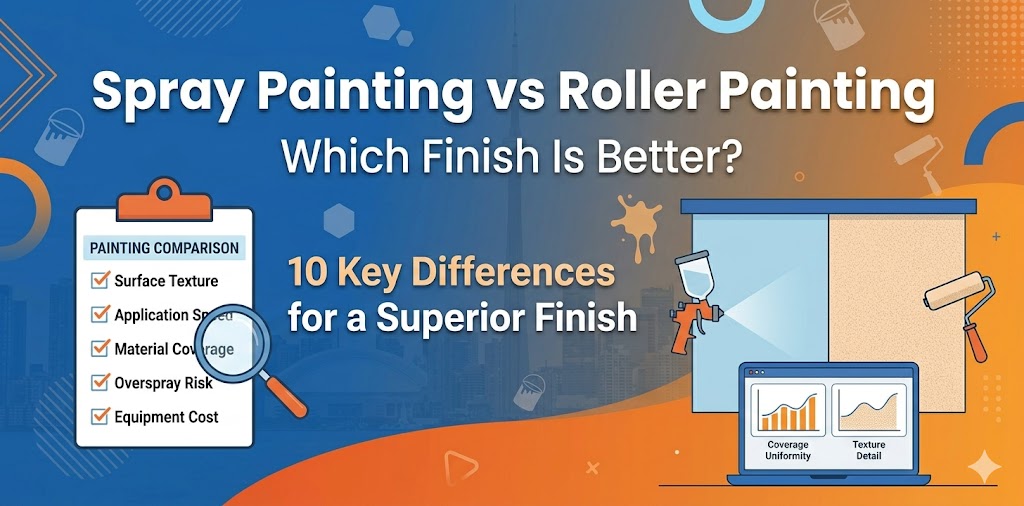
If you’re planning a painting project, one question comes up pretty quickly. Should you go with spray painting or use a roller?
At first glance, it might seem like a simple choice. But once you start looking into it, the differences go deeper than just tools. The finish, speed, cost, and even durability can vary depending on the method you choose.
So let’s break it down in a real-world way. No technical fluff. Just what actually works and when.
What Spray Painting Really Does
Spray painting uses a machine to apply paint as a fine mist. Instead of rolling paint onto a surface, it’s sprayed evenly across it.
The biggest advantage? Smoothness.
You get a clean, almost factory-like finish. No roller marks, no brush strokes. Just a uniform coat that looks sharp, especially on modern homes or commercial spaces.
It’s also fast. Large areas can be covered in a fraction of the time compared to traditional methods.
Sounds perfect, right? Well… not always.
Where Spray Painting Shines
Spray painting works best in specific situations:
- New construction projects
- Large open walls or ceilings
- Cabinets and furniture
- Exterior surfaces like siding or fences
Basically, anywhere you want a sleek, high-end finish.
Professionals often use spray painting when appearance is the top priority. It gives that polished look you usually see in show homes or newly built properties.
The Downsides of Spray Painting
Here’s where things get a bit tricky.
Spray painting requires a lot of preparation. Everything around the area needs to be masked off properly. Floors, windows, fixtures, even nearby furniture.
If not done right, overspray can land where it shouldn’t.
It also uses more paint than rolling. That means slightly higher material costs.
And while it’s fast for application, setup and cleanup can take time.
What Roller Painting Brings to the Table
Roller painting is the classic method most people are familiar with.
It’s simple. You dip the roller in paint and apply it directly to the surface.
The finish isn’t as ultra-smooth as spraying, but it’s consistent and reliable.
And honestly, for most homes, it does the job really well.
Where Roller Painting Works Best
Roller painting is ideal for:
- Interior walls and ceilings
- Occupied homes where masking is limited
- Smaller projects or touch-ups
- Areas requiring thicker paint application
It gives a slightly textured finish, which actually helps hide minor wall imperfections.
That’s something spray painting doesn’t do as well. Smooth finishes can highlight flaws.
Durability: Which One Lasts Longer?
This is a question people don’t ask enough.
Roller painting tends to apply a thicker coat of paint. That can make it more durable in high-traffic areas like hallways or living rooms.
Spray painting, while smooth, often applies thinner layers. Professionals usually compensate by adding multiple coats, but it still depends on the surface and usage.
So if durability is your main concern, rollers have a slight edge.
Cost Comparison
Let’s talk about budget.
Spray painting can cost more due to:
- Equipment usage
- Extra paint consumption
- More preparation time
Roller painting is generally more cost-effective. Less prep, less paint waste, and simpler tools.
That said, cost shouldn’t be the only deciding factor. The type of finish you want matters just as much.
Speed: Which One Is Faster?
This one depends on how you look at it.
Spray painting is faster during application. Large surfaces get covered quickly.
But preparation takes longer.
Roller painting is slower during application but requires less setup.
So overall, timelines can be surprisingly similar depending on the project.
Which Finish Looks Better?
Here’s the honest answer. It depends on what “better” means to you.
If you want a sleek, modern, flawless finish, spray painting wins.
If you prefer a practical, slightly textured look that hides imperfections and holds up well over time, roller painting is the better choice.
There’s no universal winner here.
What Professionals Actually Recommend
At Aura Painting & Co, the approach isn’t about choosing one method over the other.
It’s about using the right method for the right surface.
In many projects, both techniques are used together.
For example:
- Spray painting for cabinets or doors
- Roller painting for walls and ceilings
This combination gives you the best of both worlds. A smooth finish where it matters, and durability where it counts.
Common Mistakes to Avoid
If you’re deciding between the two, avoid these common mistakes:
- Choosing spray painting without proper prep
- Using rollers on surfaces that need a fine finish
- Focusing only on cost instead of long-term results
- Attempting spray painting without experience
Each method requires skill. The wrong choice can lead to uneven results or extra work later.
Final Thoughts
Spray painting and roller painting both have their place. Neither is strictly better. It all comes down to your goals, your space, and the kind of finish you want.
If you’re after that smooth, showroom look, spray painting is hard to beat.
If you want durability, flexibility, and a reliable finish for everyday living, roller painting does the job beautifully.
And if you really want the best outcome? A mix of both, done by professionals, usually delivers the most balanced result.